
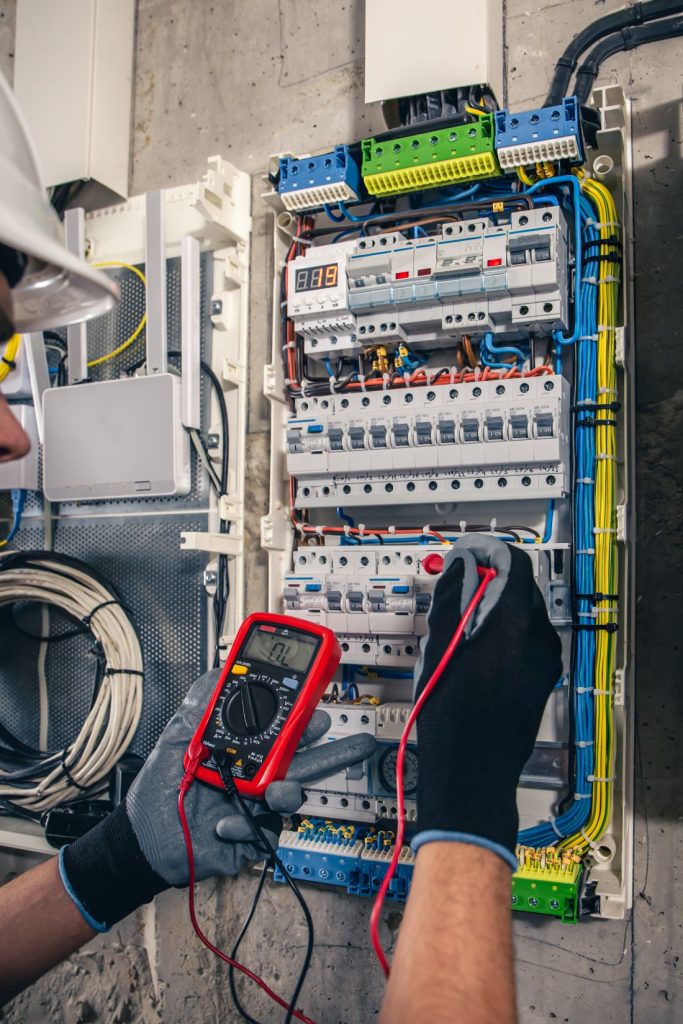
Surge protection gets specified on the incoming power supply almost by default — a Type 1 device at the main board, a Type 2 downstream, sometimes a Type 3 close to sensitive equipment. What gets missed, consistently, is the data and telecom entry point.
A nearby strike does not need to hit the building to cause damage. Induced transients travel on structured cabling, telephone lines and coaxial feeds just as readily as they do on the power supply — and in our experience, damaged routers, PABX equipment and access control panels are at least as common as damaged power supplies after a lightning event nearby.
Coordinating the chain
Surge protection only works as a coordinated chain — each stage of device has to let through a residual voltage low enough for the next stage to handle, all the way down to the equipment it is protecting. A Type 1 device at the main board with nothing downstream is a partial answer at best.
We assess the full entry path on every electrical audit: power, data and telecom — and size the SPD chain to the equipment actually connected, not just the incoming supply.