
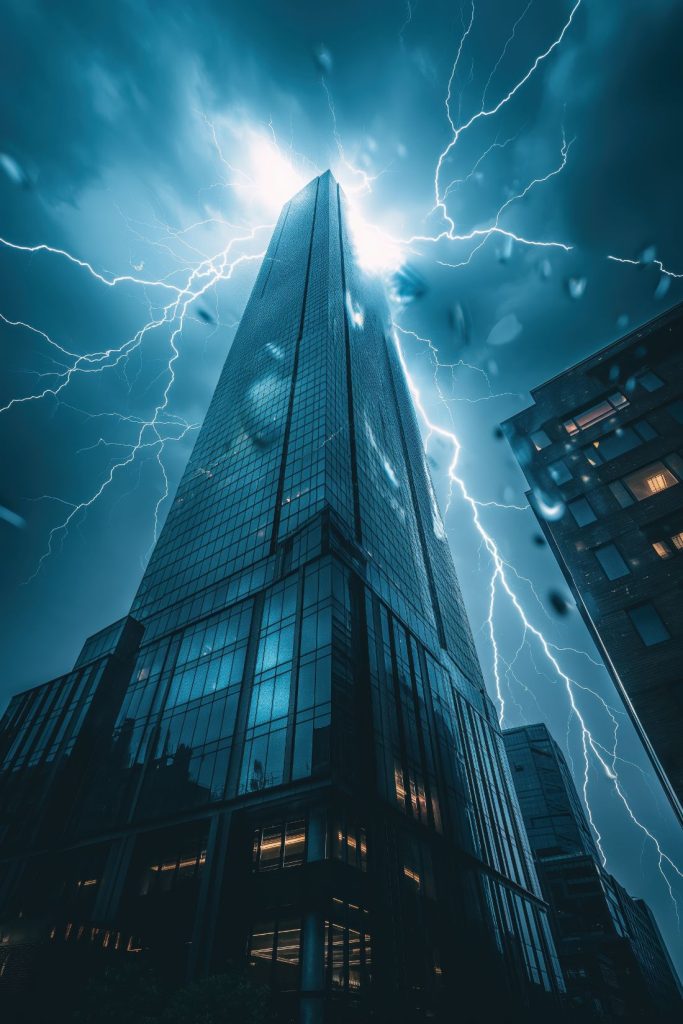
A lightning protection system is signed off once and then, in most buildings, left alone. The drawings go into a file. The roof gets new plant, the façade gets replaced, an antenna goes up, and nobody revisits the system that was designed around the building as it stood on handover day.
That is the gap an adequacy audit exists to close. It does not ask whether the installation matched the standard it was built to. It asks whether the system, as it stands today, still does the three things it is there to do: intercept the strike at a chosen point, conduct it to earth on a controlled path, and disperse it without creating dangerous potential differences.
What changed under the building
Soil resistivity is not a constant. Water table, compaction, adjacent excavation and simple corrosion all move an earth electrode’s resistance over years. A reading of 3 ohms at commissioning and 11 ohms today is not a bad day of testing — it is a trend, and it is the single most useful thing an owner can hold.
One reading tells you a value. A run of readings tells you whether the system is quietly getting worse — which is the thing you actually want to know.
What we measure, and what goes in the report
Every audit follows the same sequence, and every line of it appears in the report with the instrument and date beside it:
- 01Review of existing drawings and records — and re-drawing the system where none exist.
- 02Physical inspection of air terminations, conductors, joints, clamps, bonds and fixings for corrosion, mechanical damage and disconnection.
- 03Continuity testing across the full path, air termination to earth electrode.
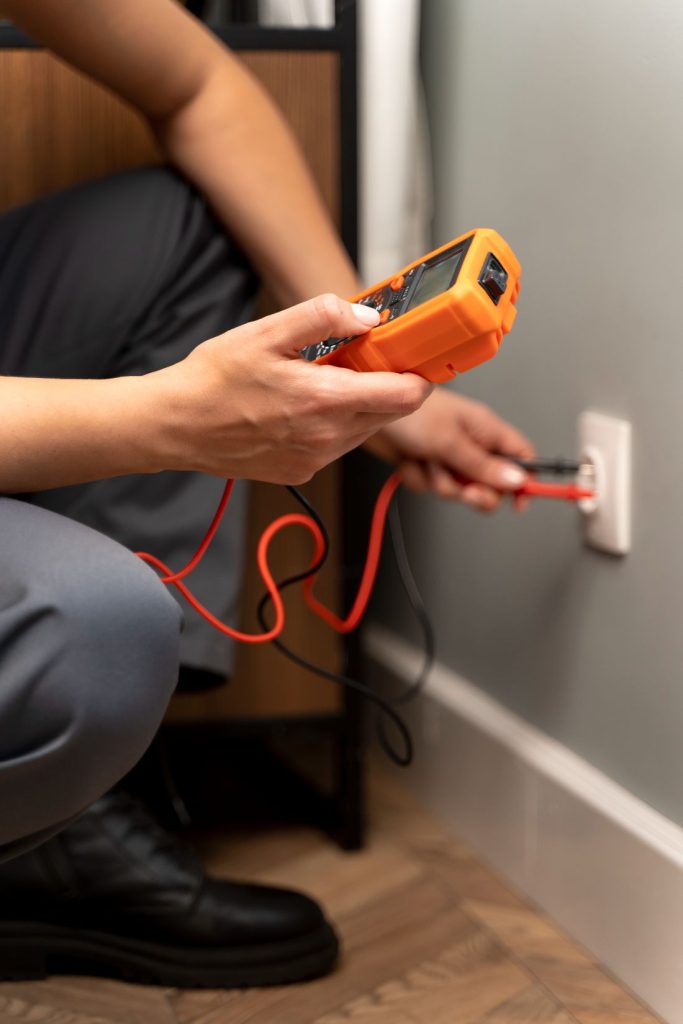
- 04Earth resistance measurement at every test point, compared against commissioning values where they exist.
- 05Assessment of separation distances and bonding of every service added since installation.
Acting on the findings
A report that cannot be acted on is a filing exercise. Ours ranks findings by consequence, prices the rectification line by line, and separates what must be closed now from what can be staged across budget years. The crew that closes the defects is the crew that found them.
If your building has had a roof or façade change since the last inspection — or if nobody can find the last set of readings — that is the point to book the audit, not the next lightning season.